

Writing Lessons #1: The Spiral
Hey! This is a new installment of the newsletter that will focus on things I've learned from other writers, which may come to you on Mondays.

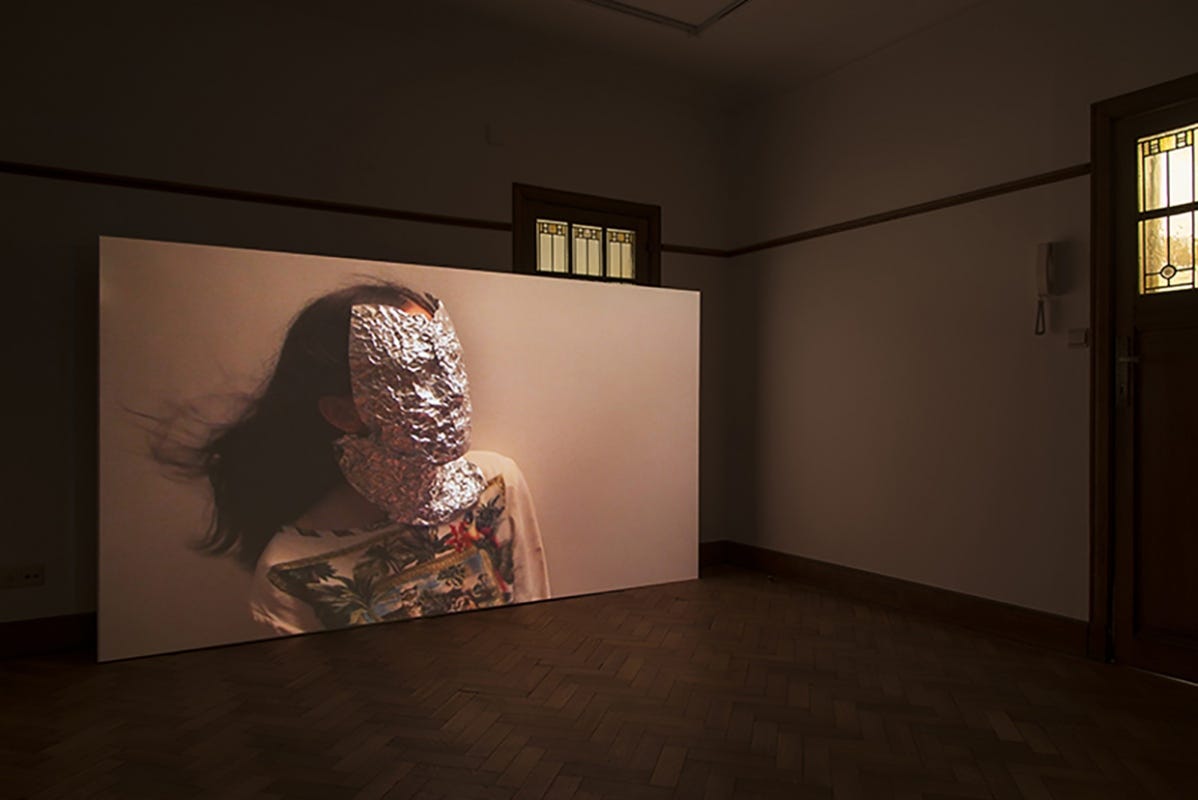
I learned The Spiral in 2015, in a writing group created by visual artists, including Na Mira, where, at one point, we went to her house and ate a recipe. Not like, we made food from a recipe, but like, we wrote down a recipe and ate the paper. *** I’m not sure why. The group that met was affectionately called CUNNT, which stood for See (C) You (U) Next (N) Next (N) Tuesday (T) because we were all, at the time, in part female or queer identified and the group met every other week. The following exercise was originally taught to a few members of this group by another teacher, and then passed down to us, and we practiced it together at Amanda Joy’s house, either inside, squished on her couches, or outside, lounging in her courtyard.
As I remember it — it goes like this: We all spent about 10-15 minutes free writing, in a journal, by hand. At the end of this time, a few people would share their writing with the group, aloud. After that, each person found one sentence in their writing to underline — one sentence that, after re-reading, had particular resonance. Then, each person would write that sentence on a new page and write about THAT. It was an amazingly simple and effective way to go from what appeared to be nothing: a grocery list, a jumble of words, a story that went nowhere, to something much more embodied. Here, I’ll do that now. Because the piece is about a writing tip, but wants to be about Na Mira.
Na was someone with a heaviness about her that I recognized right away - not heavy in the sense of dark or weighty, but in the sense of groundedness. (I had to look up this word to make sure it was a word, and I found a link to this book, that LOOKS SO GOOD TO ME!) It’s not surprising to me that her work is often video installations on very large screens that sit directly on the floor, and that there is sometimes furniture, or other heavy objects involved. I remember her hair as long and thick and she was someone who could acknowledge you and the larger group simultaneously. I looked her up again, a few months ago, and again, today, and was not surprised to see her work taking up more space in the world, as her own identity became more fluid, open and expansive.
Have you ever had a part of your piece read back to you by someone you admire? Na did that for me once and it knocked my socks off. We were at another person’s house, who was part of the group, but who I did not really know very well, but I showed up anyway and I felt out of place. I brought a piece of writing about a character named Ki who lived on top of a spiritual mountain and slide down to discover with what the earthly delights had in store. I read the piece and no one felt it; the room stayed cold. It was like I had spoken another language that was foreign and also disliked and I think one person in the group said as much. “I don’t know,” Na said, and pushed the page toward her on the table and read, from it, her favorite part aloud. In doing so, the words became object outside of me, and as such, became art.
Today I searched for this writing about Ki and the mountain top. I remember I printed it out, because that was also important to do, according to the group, and I can see why, since the paper on the kitchen table was there to slide, to re-read, to make new, in a way it might not have been if I had read from a screen. But I also can’t find the piece! I have a habit of hiding my own writing, even from myself, despite so many tips from other writers on how to stay visible to yourself, how to write a table of contents, how to use google docs, how to make a list of pieces in progress. So, my bid to you, fellow writers and artists, is to send suggestions my way: as to how you keep your old writing in mind, even when you are making anew.
***After more research through my old emails, I found that the exercise at Na’s house was different than I first wrote, at the top of this letter. It was actually to COOK something with a POEM, on paper, included as one of the ingredients. But that’s not what I remember. I remember sitting in her backyard and eating a piece of paper that was meant to be food. Stay tuned for future writing on how I often find more sustenance in the written word than in actual nutrition, as also how I am often wrong and SHOULD actually eat my words more often. But, for your reference and dining pleasure the assignment came from CA Conrad’s book A Beautiful Marsupial Afternoon and reads, in short, as follows:
Is there a deceased poet who was alive in your lifetime but you never met, and you wish had met? A poet you would LOVE to correspond with, but it's too late? Take notes about this missed opportunity. What is your favorite poem by this poet? Write it on unlined paper by hand (no typing)…Take your handwritten version of the poem and cut it into tiny confetti. Heat olive oil in a frying pan and toss the confetti poem in. Add garlic, onion, parsnip, whatever you want, pepper it, salt it, serve it over noodles or rice. Eat the delicious poem with a nice glass of rcd wine, pausing to read it out loud and toast the poet.
I also found, that THE SPIRAL sometimes began with a prompt from the host! So consider this writing lesson and spiral of the spiral!