

TECH OPTIMISM
but don't follow me

Big tech companies have been saying all kinds of things lately: the most controversial one being that platform content will no longer be fact checked. I latched onto another one of the statements a CEO made on a popular podcast about how the workplace had become too soft: suggesting that a new era of outright aggression would be good for business. I wondered whether people who face discrimination would be permitted to engage with this new style? Is my confrontation approach going to be MORE embraced now or less (answer is obvious). What I’ve been thinking a lot around these new old issues is: “tell me what you really think.” It seems like all the tech bros are relieved they can finally stop pretending they cared about progressive policies in the first place.
Substack came out with a press release in response to these announcements late last week and it all went incredibly wrong. The messaging, as Hamish explained in his live chat with a tech writer on Substack, got confused in Substack’s effort to say that one’s policies ought not to change based on who is in charge. But the fact remains that Substack went on record with this statement last week and then went on to defend it:
Elon Musk has been a vocal supporter of free speech. It’s no secret that we haven’t always seen eye to eye, but he deserves a lot of credit for advancing freedom of speech on X, before it was popular and in the face of fierce criticism and opposition.
Some history:
Substack has never committed to content moderation: an issue that Roxane Gay called out early last year. One major tech publication on Substack took their business elsewhere and everyone else said something more along the lines of: well this thing we’re doing isn’t a part of the big picture. I’m just writing a newsletter, I’m just making ends (or less than!) ends meet. Or this is all complicated and I don’t have time. Or truthfully I think all tech is evil and this seems like the best of the worst.
But BEFORE when Substack was officially not policing Nazis in favor of a stripped down feature set, they were just the service provider: they connected US, the writer, with YOU, the reader. They were the post office but they weren’t reading our mail.
All that changed with the Notes features, a twitter-like system that uses an algorithm to feed you short statements from others. This means that Substack’s whole business changed and instead of going where all other platforms have previously gone before them (into content moderation) they have stuck to their guns and called their desire to stay lean not just about money but about protecting free speech.
This is where Chris Best really put his foot in his mouth (again). Elon Musk, he says, despite what you might say about the guy, at the very least was pushing this agenda about censorship on digital platforms with X, and we can agree that he has been right about that. It’s a confusing statement because X’s right wing free-for-all was a big reason a lot of people ended up here: as a refuge. There has been another big wave lately as people leave Instagram, exhausted by the algorithm despite what business or connections it might bring them in the short term.
To be clear, Substack’s policy is that they will not allow for hate-speech. One question is what they will do to enforce that. Another issue is that their policy has no reference to harassment in its list of violations, which might sound too abstract to police but it’s clearly in the terms of Service at Wordpress, another CMS and digital publisher, just as an example. The policy also outlines that adult content isn’t allowed here and this is what I imagine Substack is perfectly happy to police.
Let me tell you a story:
When I was in my 20’s I co-created a company called CAKE which went bananas in the press because we were saying that women had a right to explore their desires. VERY EARLY on in creating that space, I wanted to have the email address: pornstar@cakenyc.com which caused either a breach in contract with our hosting service or our payment processor — I can’t remember which. The result of this was that I had to change my email address or our website would go dark.
This is where my understanding of the topic has a limit: I can’t explain why we’re fine to make money in public from hate speech, even if only by looking the other way, but we have boundaries around sex that get enforced more swiftly. I can only bet that Substack has something set up already that pushes sex content off the platform on the double.
So now what to DO. Well, there ARE competitors. Beehive is a newsletter product and Ghost is a blogging platform, both of which allow you to charge subscribers. But all of us have gotten a little used to, I think, the credibility of “Substacking.” Just having a newsletter here has meant, up until now, that you’re on top of your digital life, that you have a POV, that you write well and interestingly enough to ask for money, and that you in some way are aligned with the future of publishing.
Can Substack sustain their branding success?
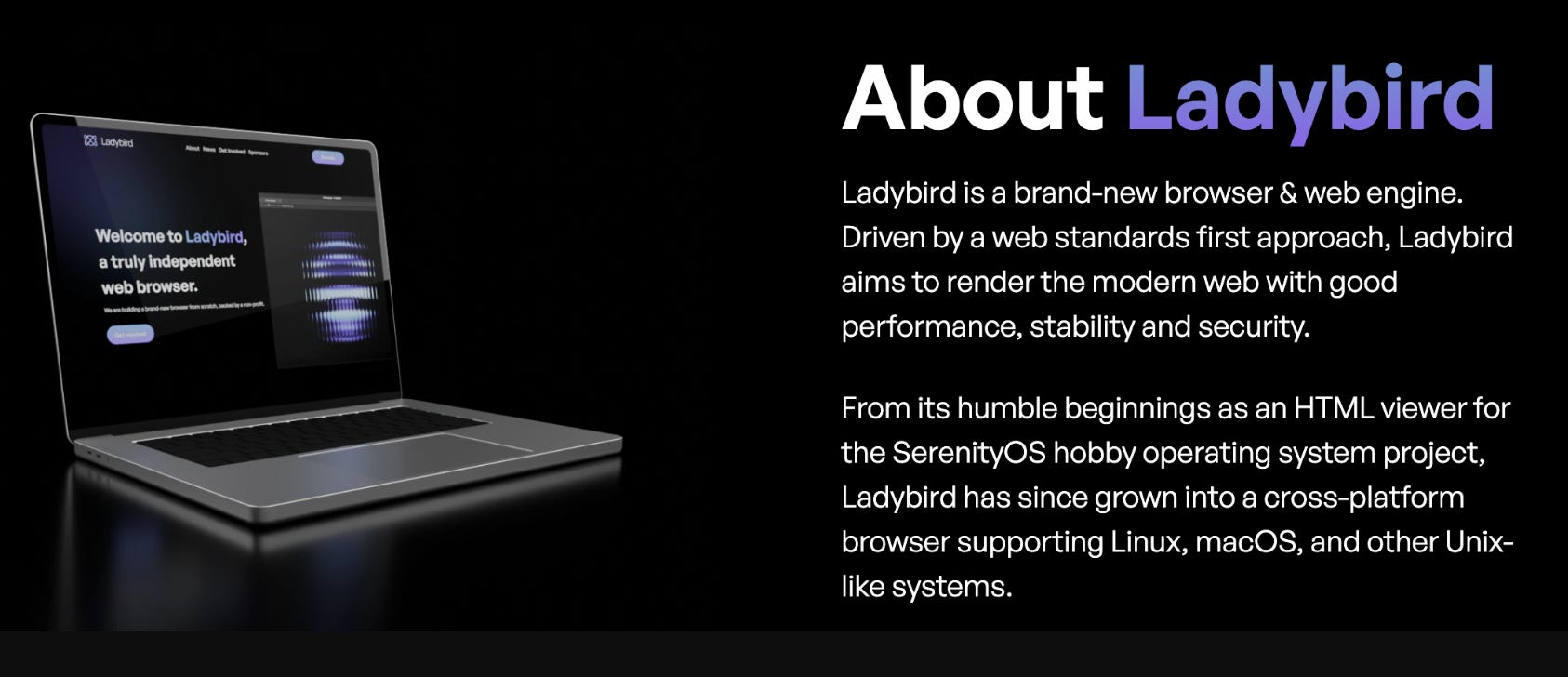
I tussled a bit with another tech writer on this topic with the premise that I didn’t think so: that aligning with Elon Musk in any respect is a bad look that’s going to get worse and worse. This writer took the time (ha…..) to step back and explain to me how economics works. The conversation got heated in the comments on his own article but we landed at this: the browser monopoly is one of the reasons that the web is stagnant in its social innovations and the key thing to a progressive digital space is ladybird.org or an effort just like it.
Can there ever be a not evil tech product? I think there HAS been and CAN be, in fact there MUST be because products are at their heart neutral, it’s people who are the ones who have the call to be good.
Lol why "but don't follow me"?