

NEXT STEPS FOR BALLET
Artist's Date #51: Smuin Contemporary Ballet's Season 32 // Fall Program

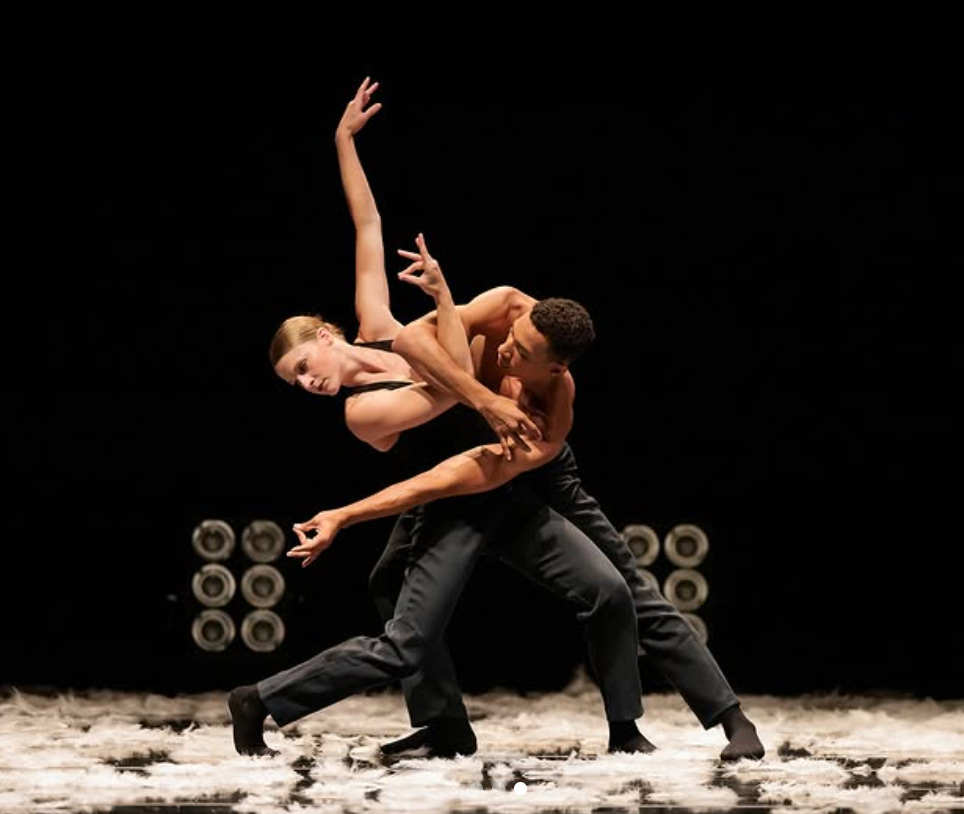
On Saturday, September 28th, I saw the San Francisco-based Smuin contemporary ballet company explore the state of the genre with three pieces under the show titled: Extremely Close.
The first was a piece choreographed by Justin Peck in 2022, which had only been done once prior by the New York City Ballet. The second piece was choreographed by Amy Seiwert, the company’s artistic director, who introduced the whole show and admitted that she had attempted a narrative (which stood in contrast to the abstract nature of the first piece). The story was based on A Midsummer Night’s Dream and included a dance version of the mischievous Puck along with his confused set of couples. The final piece was from 2007 and was more reminiscent of classical ballet, although you could see, in relation to the rest of the program, that its dramatic style referred back to a time when ballet meant serious business.
Justin Peck’s piece, Partita, kicked off the program and was almost immediately different. The costumes were bright and tight, highlighting the dancers’ strong bodies, rather than their delicate shapes (in the case of the female-bodied dancers). The music was also different, more sparse and rhythmic than melodic, and also more technical, which led to or matched the semi-industrial movement. While I was into the repetition that often came up in the piece, I felt it spoke more to modernism than postmodernism, and so I felt there was a disconnect between the colorful costumes, the very surprising footwear (sneakers!), and the choreography itself. Still, I thought that on the whole the piece was trying to create a bridge between the dance world and the visual art world as a part of its own process of post-modernization.
As these novelties wore off, I began to be bored and also a little distracted by the sneakers. Sneakers! How hard was it for the dancers to dance in these heavy white things? Also, the sound was distracting, although pointe shoes also make a distracting clunking; these puppies squeaked across the slick stage floor. It all made me curious about the relationship between choreographer and performer.
What does it mean that a piece has been done elsewhere first? What is the statement about this group being the second to perform a sought-after piece? How do ballet works move through the dance world? How does one get permission? How true to the original does one have to be? For instance, is it written somewhere that the dancers must wear sneakers for the piece to be signed off on as the same?
But also about what forging a relationship between contemporary visual art and dance really means operationally. Justin Peck is well enough known that even I recognize his name, and I’m not up on all the dance news. What does that kind of celebrity do for you in the dance world, or what does it mean to crossover into mainstream recognition as a modern choreographer?
For the second piece, A Long Night, which was based on the Shakespeare story about two chaotic couples who can’t choose well enough between themselves, I had other thoughts, mainly: when you break out of the strict ballet container (a dancer sobbed with real sound!), it can be a risk to ask dancers to act. It can easily turn from movement to pantomime, which I think makes the performance too rudimentary. As for the costumes, Puck wore a gold top and bottom, and the others wore traditionalish European garb, so the time frame confused me. But by the end of the piece, I was surprised to realize that I felt delighted! I think that the attempt to be base-level playful and understandable was a unique enough intention and one that I ended up appreciating, even compared to the artsy opener. It wasn’t until after the show that I realized A Midsummer Night’s Dream is a very famous classical ballet by Balanchine, so I wondered within contemporary circles, how sacred the original interpretation is held, if at all.
Finally, the last piece, Extremely Close, the name of the whole performance, premiered in 2007 and acted like a showcase for the final hurrah of romantic dance in its contemporary form. There were different modular parts of the set where mini dramas (soloists and duets) were performed. Then the final duet was a very dark art version of maybe sex? played out symbolically between two dancers, a man and a woman. The piece concluded with one dancer, the man, sending the female artist down to the floor (a little death? an orgasm?) and pulling the black surface of the floor, which turned out to be a layer of fabric, over her body.
You can see why that shit doesn’t fly anymore. Even though it was meant to be the crowd-pleasing ending, I felt there was a recognition, by placing it alongside the two other pieces, that the dance narrative has moved elsewhere. Although I wasn’t convinced by the first two pieces that it’s landed anywhere concrete as of yet.
Not that it’s me that needs convincing. As I looked around the audience, I realized (not for the first time since doing my artist’s dates – a weekly Saturday jaunt to notice my internal landscape in response to some art) that the members were very much older than me, with a few cranky children thrown into the mix.
This always strikes me as odd and unfair! The dance world needs some fresh new campaigns! Sure, it was a Saturday at 2 pm, and it was nice out, but these dancers have worked so hard, and with their bodies, I think it’s a medium that would resonate for a wider audience than it often actually reaches.
There’s more to say about Smuin as a company itself, which seemed, as Dan Savage might say, to be very GGG. The program notes mentioned that all three ballets had never been shown in San Francisco, so there’s a desire to bring three different perspectives into one place - in this case, the small and accessible Blue Shield of California Theater at YBCA. These dancers had to portray so many different views of dance in this one showcase, and really did seem to be willing to ask what’s next for ballet. There was a cohesiveness within the company -- no one dancer stood out more than the next, and you got the sense (they smiled....) that they enjoyed doing their work and that they worked well together. It did not feel like there was one diva or one star who the rest seemed to serve, and that in itself is something new.
This made me like them! I’m in support of this group, even though they might not have answered themselves the question these three pieces, put together, seemed to have posed. They made room to explore what’s out there, recognized that perhaps viewers still need some kind of story, and left us with the very last gasp of heterosexual drama, where men draw the curtain on an ill-fated romance.