

MEN MASTER MONSTER
Artist’s Date #37: a close read of Mozart

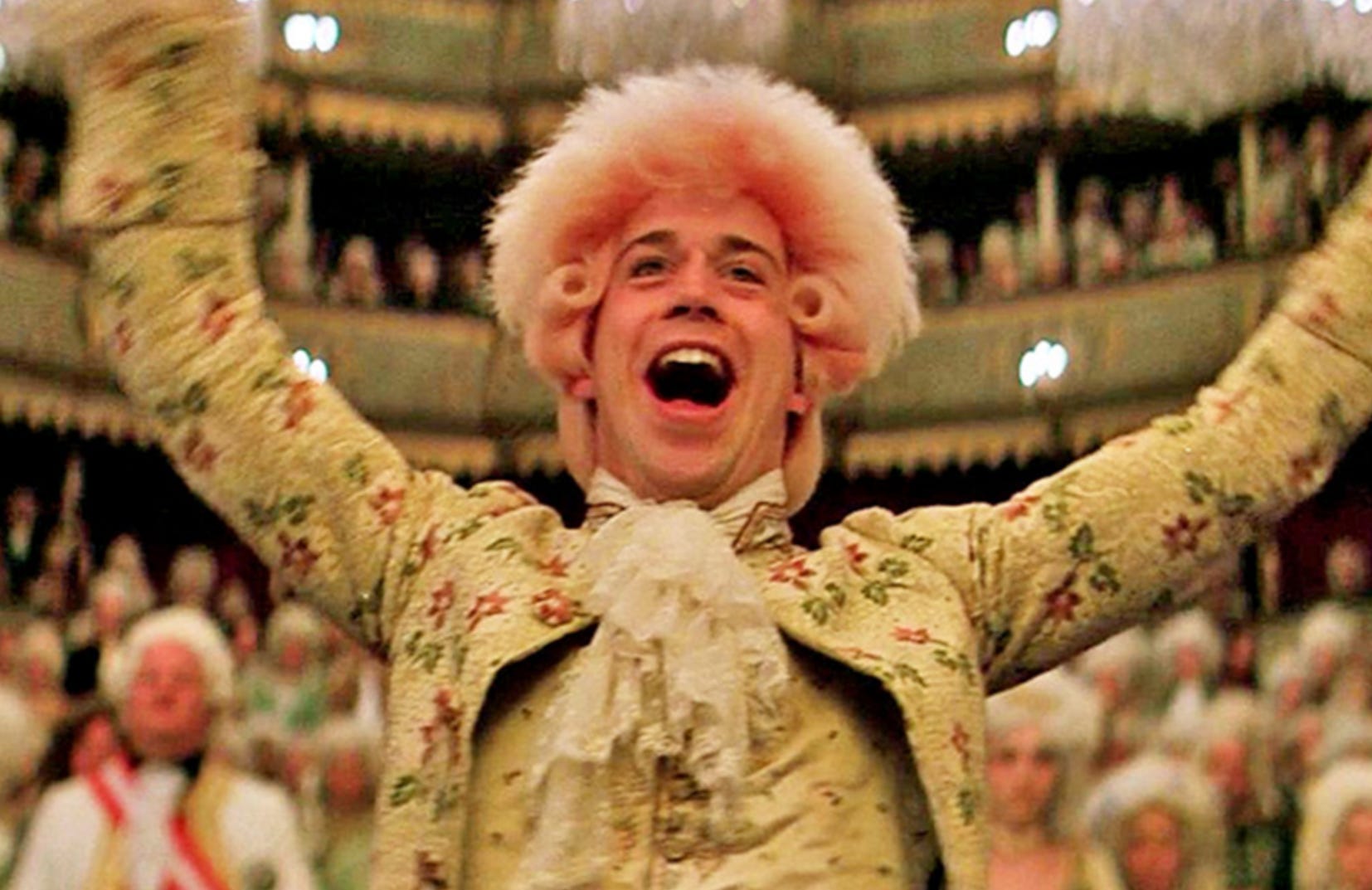
I haven’t been getting to my artist dates much since the election—I’ll be honest about that. Instead I started prioritizing “self-care,” which as it stands is so entirely body-based that it left out my brain almost all together. But that’s not my problem with the spa, or the walk or the bath or the candles. It’s more that they somehow do not lift my spirit.
On November 2nd I was already a bit running out of ideas for my solo Saturdays. What about volunteer dog-walking, suggested my friend Anna, who had a whole list of things she would do—were she to demand that Saturday mornings were reserved for herself. They all sounded amazing but truthfully more amazing for HER. That’s the thing about making an artist’s date—it begins and ends with you following your own impulses, as lost or as found as the choices may be.
So what did I do? I spent a bunch of money. I spent a bunch of money to go hear some classical music. It just seemed that something good might happen to my brain if I went to hear chamber music alone on Saturday morning at 11am. There’s a group in San Francisco that has been providing early morning music programming for a long time and I saw that the group responsible for the series was about to retire.
At the box office the cashier had that non-negotiable look about him and I handed over $60. I was annoyed. I felt like I was doing music a service by showing up for it so early. I also felt like there was no way that that hall was even remotely sold out and I was right. The tickets I bought were the least expensive and I immediately went to the front of the balcony where there are those little box seats. I don’t know if I’ve ever sat in those before but I noticed the sound is really clear when you’re high up but also right above the instruments. I felt a lot better about the money then.
The murals in the concert hall were terrifying. Big arches filled with scenes of people on top of each other in cluttered quarters where later there might be a plague. There’s a sense of a town but in a haggard way, as if gatherings of people meant poverty and an unruly sense of a lack of control. They line the whole theater in almost life size scale and the ornate ceiling is replete with chandeliers but elude elegance. The only beauty I found was the way the sound moved its way through the whole place.
If you were to suspect that there were mostly older people at this performance, well you would be right. It surprised me though, that I was by far one of the youngest people there and there weren’t that many audience members there under 60. As the group started to play I noticed that the first violinist was not playing well and was reminded that most likely these performers are sight reading. The amount of music professional musicians learn in a month is astounding.
A short older man with a bright face stood adjacent to the performers and he began describing the history of the music we were hearing. In an animated tone he took us to the moment when Mozart wrote his first quartet — the one we had just heard. We learned that just a week ago, the director mentioned, confirming my suspicion. He told us about the beginning of Mozart’s career and how the concept of “quartet’ hadn’t really been born, though there were four players in all of these works. Instead the first violin was the king and the other lines were there to support. In his history lesson I learned that Mozart only added fourth movements to his quartets because that’s what Haydn was doing. This sounds a bit silly but also Mozart was 14 when he wrote his first chamber piece, so that explains a bit of the juvenile approach!
As the program continued we head a piece Mozart wrote later, but not so much later that the concept of the quartet had all coalesced. In it, Mozart wrote the cello a line that the program director described as poverty stricken. I loved hearing his outrage over Mozart’s underinvestment in the instrument’s capacity. He tells us that we forgive Mozart because after all, he’s still just 18 and in ten short years he will have completely matured. He’s actually still at the point where he’s ripping off Haydn, not just in form but also in melody—and the chamber group plays a comparison because a piece Mozart heard and a piece Mozart wrote that sound exactly the same in its main melody.
Like Mozart, I hate playing second fiddle. It’s not so much that people know you aren’t as good as the first violinist, the one that sits closest to the audience, but that the parts are not as interesting. But the first violinist is also under a lot of pressure. I know all this because I went to a chamber music camp in middle school. Yes, take that all in. It was in Vermont and I brought my little instrument and my trunk full of clothes and let a box of raspberries get eaten by ants at the side of my bunk. In these ways it was like any other camp but during the day we played music. It was there that I learned that before you start playing with a group you all breathe in together.
It was there at music camp that I first saw the movie Amadeus—that terrifying 80’s flick with a man in a pink wig and the highest most aggressive laugh ever heard. But I don’t remember learning, in the movie, about the history of his father: a man who was a court musician himself and decided, at a young age, that Mozart would do his job for him. Instead of getting better and doing his own work he made his son take up all his lost efforts. He was relentless, I learned, and in clear and unadorned language, the program director described an authoritarian father figure Mozart never escaped. He was domineering, exacting and demanded absolute obedience while managing every aspect of his son’s life.
I had a sense as I heard this description that we were eerily hearing about a version of our current moment: how authoritarian men are born of impossible fathers and how essential the father figure narrative (un-deconstructed) has been for our times.
Keep reading with a 7-day free trial
Subscribe to Art Monster to keep reading this post and get 7 days of free access to the full post archives.