

House Museum
Bodega Bay Cottage

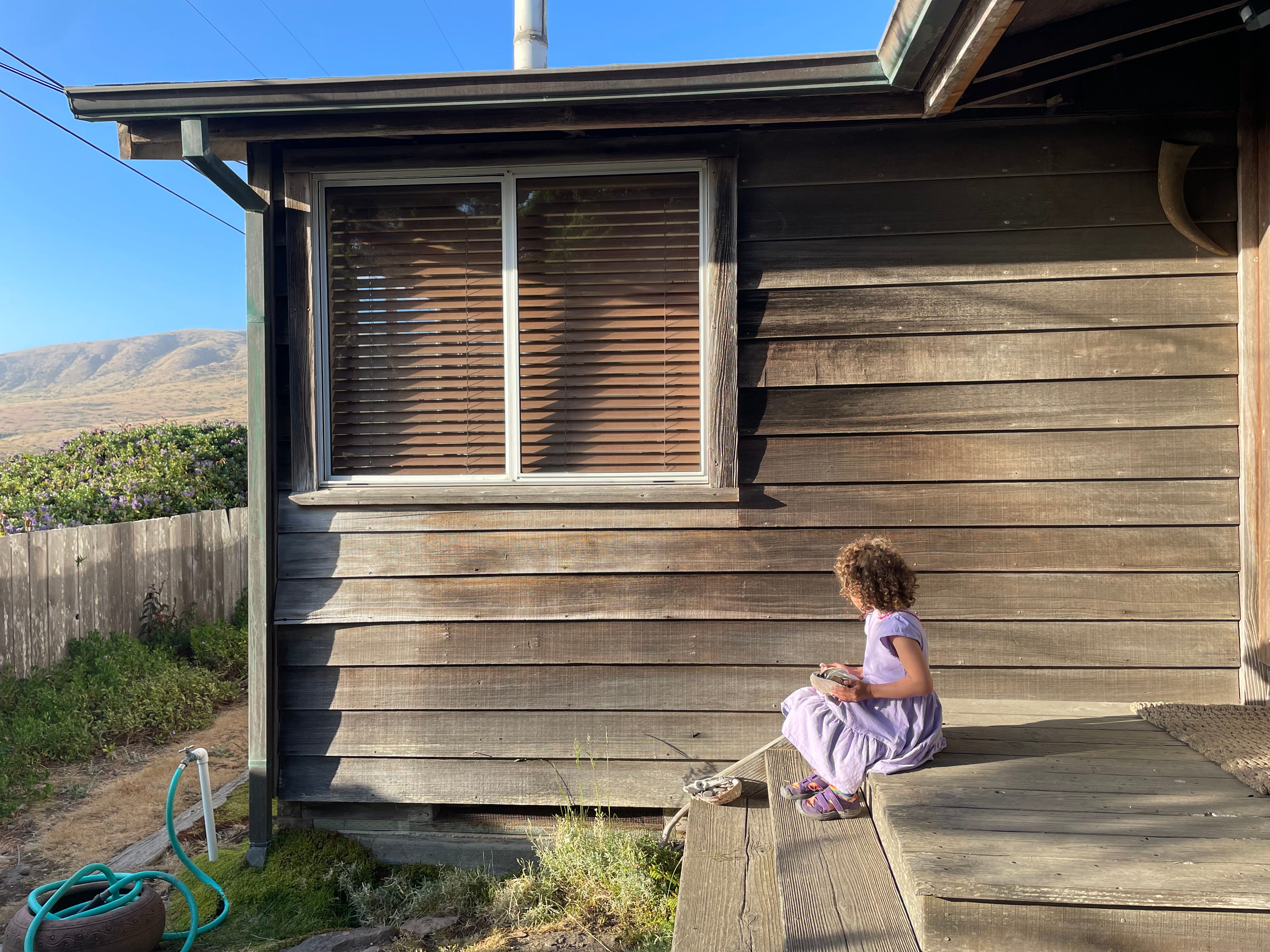
The first thing Olive found at our AirBandB was the otter magnet on the fridge. This was a good omen, I thought, though it was hard to concentrate on good because I was so hungry. “Let’s go touch our toes to the water,” she had said as soon as we arrived, eyeing the thin creek that was between us and the ocean. Instead I drove us to town where we paid too much for grilled cheese and then way too much for pasta and cheese from one of those small town bodegas but we needed some dinner.
The inside of the cottage had beautiful things: two pairs of heavy and well functioning binoculars on the shelves and various books about water including one by one of my writing instructors. The windows were lined with thick bushes of purple flowers and the pleasant hum of a thousand bees.
In the fridge were the world’s most delicious apples.
"What if they were restoring apples, where if you ate one half the other half would disappear but then the half that you ate would reappear,” asked Olive while we them all up.
By the door was a Patagonia backpack and a hat ready for adventuring plus a tiny electric lantern that would have been exactly right for the beach at night.
We tried our hand at an early evening stroll the first night, trundling down the blocks to the dunes. The beach was lined with jellyfish washed up like plastic and we avoided stepping on them and soon grew tired of the wind and the fear.
The walk home was something. Both of us wet up to our knees and carrying our shoes and hobbling along the rocky concrete while looking aghast at the beautiful views everywhere.
A hot guy stood near his a truck about half-way back asked if we needed a ride and I did not say yes but there was a part of me that thought otherwise. I did ask about the jellyfish who we had probably stepped on, just to make sure.
“As long as you didn’t eat one, you’re fine,” he said, when I asked if they stung.
Back inside, we watched the creek turned silver at sunset and then turn again to the color of blue and I cranked the clickable fireplace warming the whole place.
The next morning, the fog was so thick you couldn’t see the creek. We sat and waited until the sun peaked out and then we tried to leave and then the fog set in again and we waited again until the sun grew stronger.
Then we headed up north to Schoolhouse beach where starfish and sea anemones could be seen when the tide drew back low. Around the corner by the big rocks in a planet of rocky crevices, monstrous looking aqua blobs sat squished up against each other at the base of the rocks and orange and pink starfish glommed onto the bottom of others.
I began to worry about the tide, no matter how many times I had checked the time calendar and also noticed that Olive had fallen into the zone: pulling baby mussels off the side of the rock and depositing them into a little pool of other baby muscles which she was affectionately calling a mussel nursery. The sand by our stuff was hot and there nothing to do but walk over it until we got to our shoes and the cooler sand on the other side of the cliffs where we played again by the waves.
That night we had dinner somewhere I can’t remember. On our way home we saw a bunny dart out of its burrow on the side of the road. We spent the rest of the evening placing carrots near the bushes and fences of the house in hopes that another one we saw would dart out. There was something manufactured in this but it was the best I could do.
There was some tension there. I wanted to take out the scrabble letters on the rug and make the word Supercalifragilisticexpialidocious out of the little pearl tiles. I wanted to be there alone for two night to read and write and sit out by the bees.
The next afternoon I began to notice that the people in this town didn’t rely on the weather to tell them whether it was time for an adventure.
The second night I sat alone and watched the sky turn impossible shades with the same electric fireplace burning away.
The book I was reading was leaving a veil of speculation everywhere over the trip. In the book Memory Police, the inhabitants of a small island become victims of the “memory police” who remove objects from the culture along with any memory of the thing. I felt a bit like a reverse member of the Memory Policy at this cottage, as if memories of things I never really had been returned to me.
The magnets on the fridge were full of memories of places I never visited. The binoculars struck me as a kind of his and hers I’ve never had and the backpack as a sign of adventures I’d only fantasized about. It was disconcerting this familiarity with things that were never mine.
It was the same with the apples. We both felt it was the most delicious thing. Maybe is was so good as to be the ONLY real apple we had ever eaten. Maybe our whole lives had been fabricated and these hippie memories from the cottage were our first encounters of real life. WHAT IF?
Then there was the matter of Jensen’s book on the shelf. It was as if this reality had been created by some kind of code. It wasn’t exactly the algorithm but also it was. Jenson is this kind of writer; his real is a ghost of the past that lives in a cottage by the sea in foggy town that push you in and out of your comfort zone.
“Sometimes,” Olive said, “I can’t believe that we’re HERE.”