

BEING WITH WHAT ACTUALLY IS
Artist's Date #35: Green Dragon Temple Zen Center

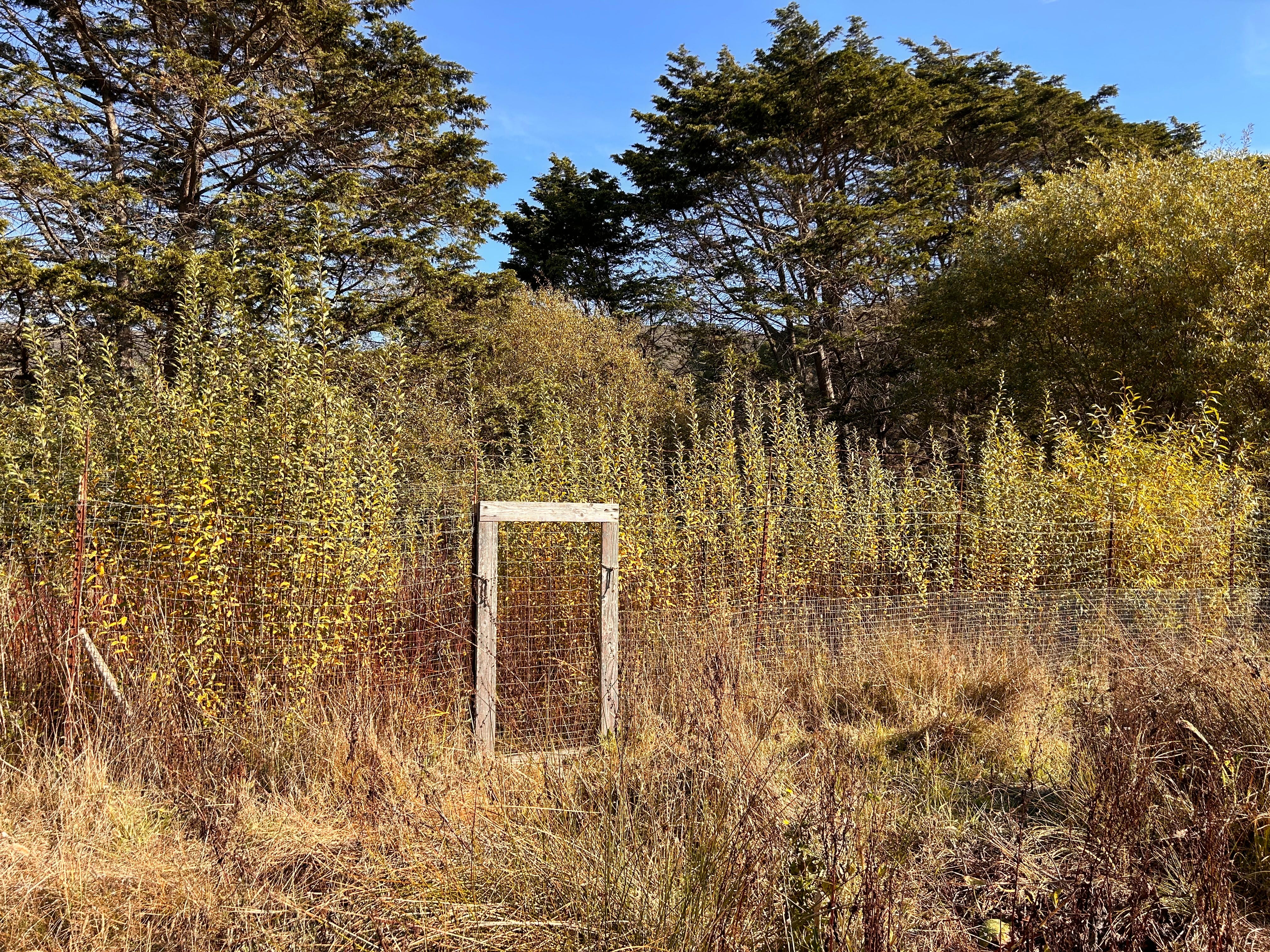
Before I went to the Green Gulch Farm I thought of myself as a person who likes to DO THINGS. I like to be active, engaged and even controversial when the moment calls for it. Writing requires stillness but my writing here is just a report about something I’ve DONE. Maybe I sensed a deep need to stop doing and that is why I signed up for a three hour session to learn zen meditation. Or maybe I was just intrigued by the driveway to the center: a long rocky thing that extends past the road to either Stinson Beach or Mount Tamalpais, depending on which way you turn. I know that if I hadn’t signed up for it before the election, I very likely would never have gone.
When I arrived on Saturday I didn’t have directions to the right spot to meet. The location of the retreat building was not obvious. The grounds were quiet and not populated. There was only a bit of fog sitting heavy over some low simple buildings that I walked around in a circle. The “welcome” center was closed and finally one person peeked out of the clouds. She was a younger woman, maybe in her early 30s, with dark brown hair and a simple outfit. Both of us admitted to each other that we didn’t understand where to go.
We heard some other people coming down the path from the parking lot, talking and laughing. One knew where to go and took the lead and we all found ourselves gathered on a wooden deck outside the temple, which was closed. The deck had a little sign asking visitors to remove their shoes, and we did, stuffing them in the cubbies by the entrance. There were still a few minutes to kill, and so most of us went to the side of the building where the sunlight had begun to shed warmth on the wood panels.
There some people talked and some people stretched and others took some sips of their water. I noticed one woman, with a lot of turquoise jewelry, giving recommendations already. You’re cold? Oh, you should remember a scarf. A scarf helps a lot in these kinds of situations.
There’s one in every group, I thought later, when the same woman spoke without raising her hand and confronted the leader with her own interpretation of other people’s questions. Me and another guest noticed that the leader had shown so much skill in her responses: a rapid cycling of different approaches — first confrontational, then warm. Eventually she deferred to the questioner as the authority as if that were no skin off her back.
Before we went in the priest gave us an introduction. The details didn’t make a lot of sense to me or I got lost. There was mention of a Soto Zen practitioner that came to Japan and also a founder of Polaroid who once owned the land. There was another detail of land rights in the area that had turned agricultural and required the center to have their own garden. Later, when walking to the beach with a new friend, I wondered whether the residents saw the garden as a burden. Well, some burdens, he began to reflect, and I interrupted him to say yes, I knew what he was getting at.
The priest leading the session told us to walk into the space with the foot closest to the door and that it was customary to bow when you entered. Inside was spacious and lined with black square cushions set out in rows. There too there were organized ways of being: giving a little bow to your cushion and also to the center of the space before you sat down. We were also to spin around and face the wall rather than climb over the cushion and put our feet on the surrounding wood.
We talked a lot about how best to sit: whether to cross the legs or sit in the lotus or just fold the feet close to the body. I stuffed a few extra pillows under me to make it easy for my knees to press down. Then we had a period of time to meditate.
The priest said that in this practice we were not going to “try not to think about things.” Sometimes meditation is thought of as a practice of removing thought or imaging thoughts are like little clouds, and we just let them pass. I liked the recognition that for most of us thoughts do not work that way. Instead they are things that hold a firm grip, become ingrained, develop into patterns and eventually build up identities. This stance–that Soto Zen doesn’t ask you to let anything go, gave me more permission to be able to acknowledge, first, what was actually there.
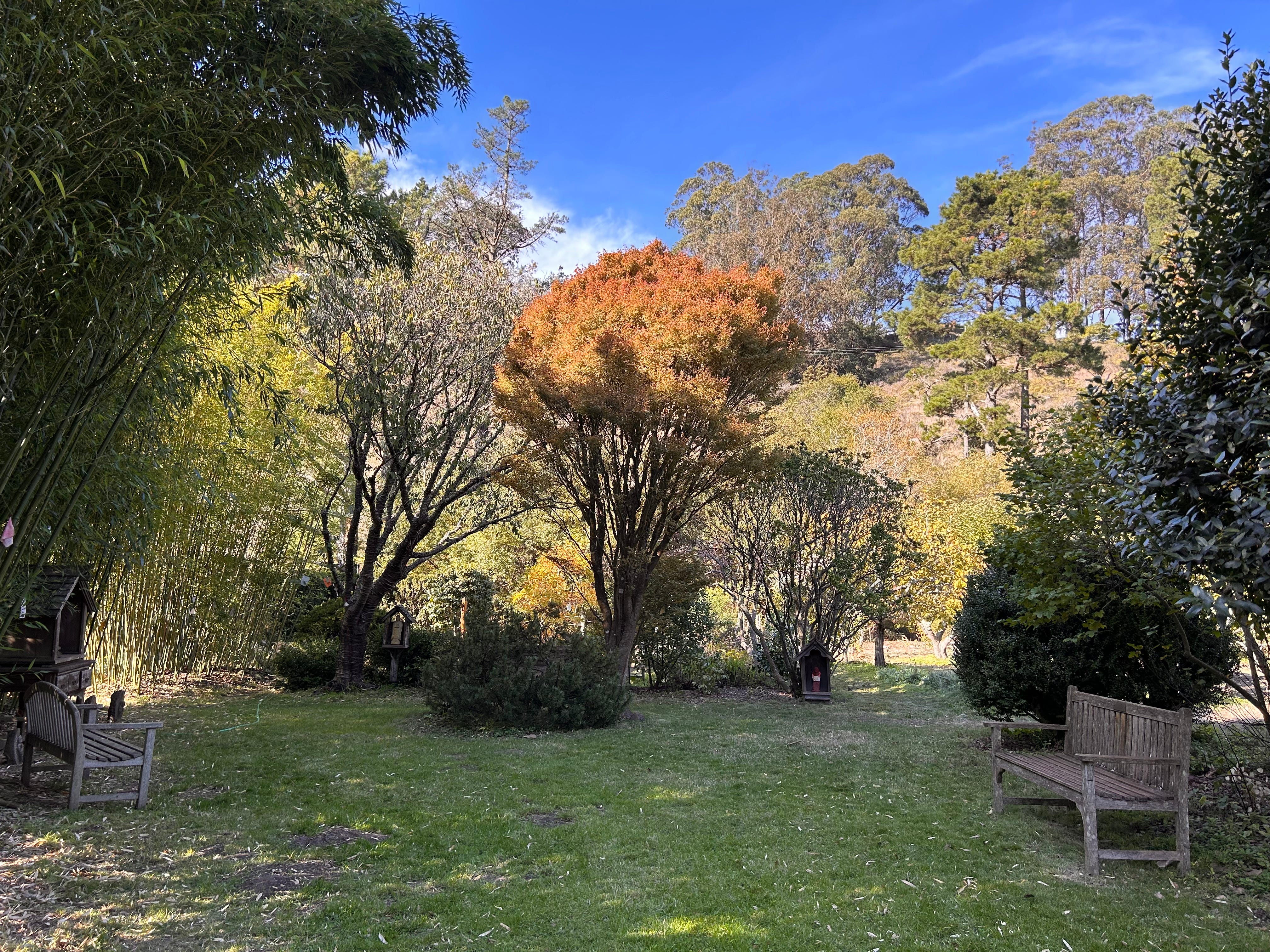
The postural instruction was helpful and I noticed I wasn’t distracted by physical discomfort. Instead my feelings burst right through to the surface, accompanied by thoughts I had definitely been trying to push far away. I had a biopsy coming up that was likely for something benign but that did not make the idea of a needle in my breast any more exciting. Also this partnership, if you could call it that (and in therapy I no longer do) with the other parent of my prize possession has come to be another model of how I lack care. Tears streamed down my face and I wondered why everyone else wasn’t crying. Most people do not come to meditation because everything is rosy, an old teacher once said.
The stress I’ve been feeling has been about how hard it is to keep up the straddling: a world in which these feelings have no place and a body in which the feelings are born and reside.
I was embarrassed by leaving the room during the walking meditation to wash my face. Returning I took my place behind the priest who was leading both sessions: her body in black clothes — one foot moving so slowly in front of the other that you could hear the material rub together as if that was loud.
Keep reading with a 7-day free trial
Subscribe to Art Monster to keep reading this post and get 7 days of free access to the full post archives.