

Artist’s Date #14: Reading for pleasure
The true shape of rage

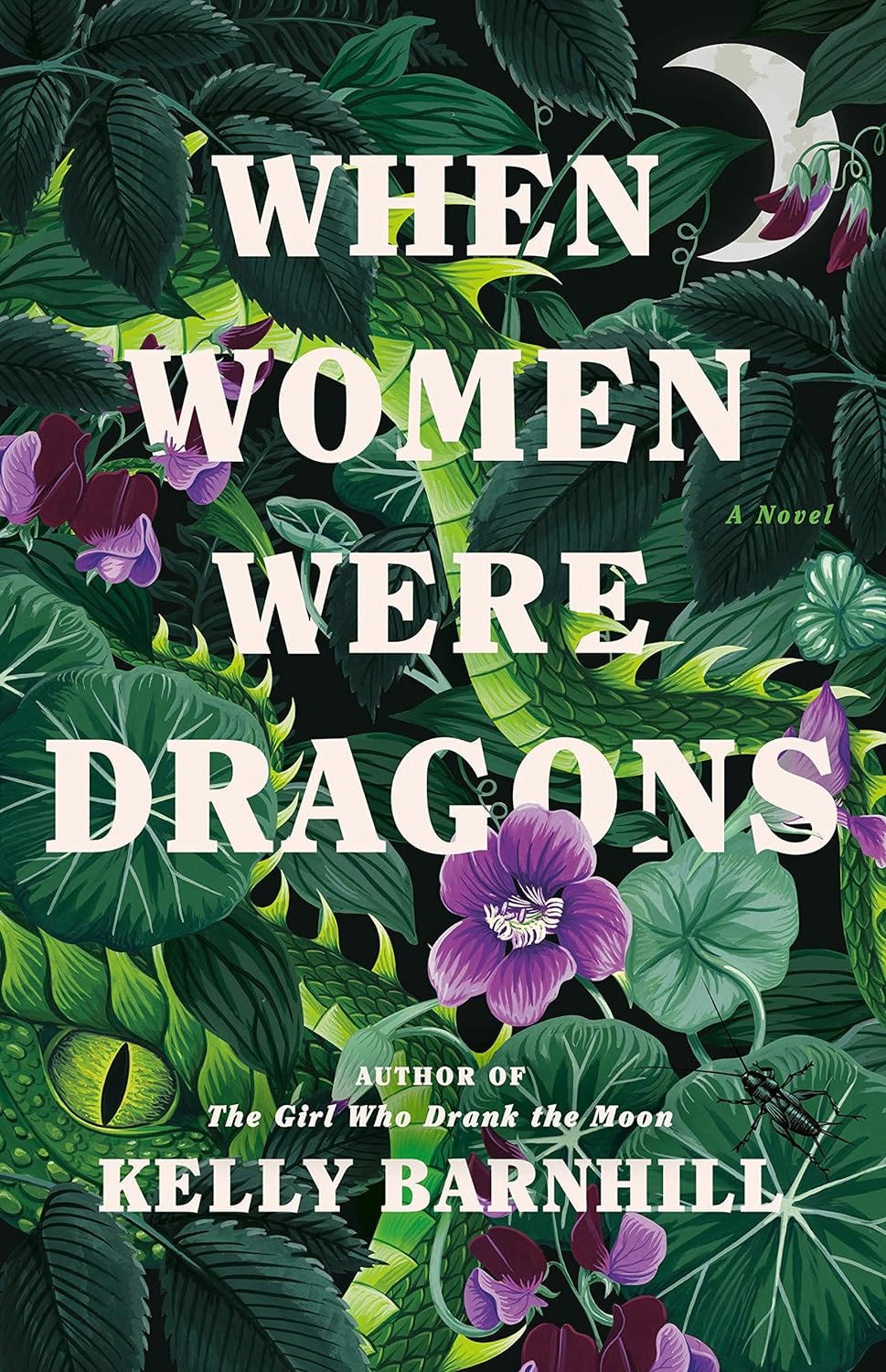
In Kelly Barnhill’s book, women get so angry about the patriarchy that they transform into dragons. According to the book’s own lore, using rage to turn into a mythical creature from the middle ages was a documented phenomenon throughout history but the US in particular saw a MASS dragooning event in April of 1955. Despite the impact this had on people’s lives (mothers disappearing, fathers getting eaten or burned up in the process) there was an almost government supported appeal to deny the whole event. The dragons themselves remained hidden from the everyday world and humans went along as if there had never been a whole mass of women who turned their fury into wings.
The tale is told from the POV of a child, Alex, who’s Aunt Marla becomes a dragon shortly after she has a daughter. Marla's departure leaves Beatrice in the care of Alex’s mother who takes Beatrice on as a daughter of her own. Soon after, Alex’s mom dies of cancer and her dad remarries, fathers new children and leaves his first daughter and his niece to fend for themselves. He puts them up in an apartment across town and gives them a monthly allowance and expects Alex to become Beatrice’s de facto parent. Alex does this to the best of her ability, raising Beatrice as a sister and a daughter. In the tradition of silence around dragons Alex never mentions Beatrice’s birth mom at all.
The real trouble begins when Beatrice starts showing the signs of transitioning to dragonhood herself. Alex now has a conflict: will she hold her dear one back from reaching her potential or will she allow her to grow and lose her to the sky? She wants to hold onto Beatrice but also struggles with how she will raise a child while still growing herself. This feels like the crux of the story; a generational loss whereby mothers know what to do but lack the resources to do it.
There are many beautiful moments in the book that serve to remind us that humans have hearts that were made to be broken and then heal up again: The transition from human to dragon describes the body unfurling like an iridescent butterfly coming out of a chrysalis. A political protest is raucous and fun like I remember from the olden days, and reflections of childhood in all its unruly, chaotic, dreamy and energetic qualities - especially the personality of a dragon child - feel inspired. The warmth of romantic love is also a part of this story when about Alex falls in love with her childhood friend.
The question of who dragons and why is left unanswered, both for us and for Alex, though she yearns to understand why her mother wasn’t saved from her cancer by a transformation herself. At the same time she resents Marla who DID take off and in the process left Alex with the burden of raising a cousin as a daughter, long before she was ready to even care for herself. In this there is a hint that the dragons are in part selfish. Sure, they leave the patriarchy behind but also any of their loved ones who are still tied to it. Alex’s mother was selfless and died because of it but that gave Alex a reason to keep living out a rational dream: to become a world famous physicist and seek acclaim in her field. Was it because her mother was not capable of leaving her behind that Alex remains dedicated to worldly success? And was that sacrifice a worthy gift to give to a daughter compared to Beatrice’s mom who just outright left? Alex is more serious and concerned with doing things right than Beatrice who lives unaffected by her mother’s abandonment. Beatrice’s free-range childhood seems only to encourage her toward the same fate as her mother. Dragon or dead is the binary and only Alex can tow the middle line.
The book really changes in tone once the dragons return. Marla is the first to visit and though Alex is mad, she accepts Marla’s help. More dragons who once fled return and begin to take accountability not only for their personal lives but also to the community at large. They show up at sewing circles, they march with farmworkers, they join anti-war committees, all the while living in their large grotesque bodies that were previously denied as existing at all. Marla, Alex, Beatrice and a few other dragons live their days out in a kind of intergenerational human / dragon commune and Marla picks up the job of raising her daughter.
Now Alex has a bit of the book to focus on herself. She reunites with her childhood friend and they become partners until PLOT TWIST, her first love finds she must become a dragon herself. Unlike the betrayal Alex would have felt by her mother leaving, she accepts Sonia’s desires and ends up with another earth bound person to be with until their end.
I enjoyed this Thelma and Louise meets Raya themed story where children are seen as delightful ruffians. I related to the conflict Alex felt between letting Beatrice be wild or taming her to answer to the world that’s run by the minds of men and their interests. There is recognition of trans dragons and dragons of color lest the process be associated only with white straight privilege. I did find that the narrator’s interest in remaining human caused the book to come off as a bit puritanical. There was some gendered characterization with the irrationality of women turning them into entirely different species all together. I wondered about what it was like to live as a dragon and why they came back. Is it just lonely at the top (of the atmosphere)? Or was it that they were so ostracized by their unacceptable power that until the world accepted women as fierce, they had nowhere else to go?
Also, like in so many feminist texts these days, the men get a real pass. Sure, some are eaten or fried by fire and others die lonely of old age but only one man in the whole book comes off at best neutral. An old scientist, rumbled, vested and the responsible author of intertextual documents about the phenomenon of the transformations, stands in as the sole male figure who wants only to uncover the truth. I relate to this block in imagination. The book was written when it’s hard to envision a truly good man. The writer says seeds of the book began with Christine Blasey Ford’s testimony and grew into a story about memory, loss, trauma and being shamed into silence. I also relate to the point in time in the author’s life when one reckons with all this (she’s 49) and how most women’s pasts, even today, contain silences that would burn the world alive were they all to be revealed. Perhaps the writer is right to suggest that simply acknowledging all women have done in the past 50 years DOES leave men behind. As we recognize the place women’s anger and true shape has in our culture there’s less space or place for those who can’t live among us.